

Thinking about a Will can feel daunting, or even morbid, but it doesn’t need to be. Putting provisions in place during your lifetime is one of the greatest gifts you can give your family: peace of mind.
What Happens If You Don’t Have a Will?
If you die without a Will (known as dying “intestate”), the Laws of Intestacy govern your estate. This means your assets could be distributed to individuals you wouldn’t have chosen, and it may result in unnecessary Inheritance Tax liabilities.
10 Key Things to Consider Before Your Appointment
Considering these matters early makes it easier to discuss your wishes with a solicitor or estate planner. Use this checklist as your starting point:
1. Executors
An executor manages and distributes your estate. They pay off debts and ensure your beneficiaries receive their inheritance.
- Think about: Who do you trust to handle paperwork and finances? It is always wise to name a substitute executor as a backup.
2. Trustees
If your Will creates a trust (to protect assets for a minor or a vulnerable person), a trustee manages those assets.
- Think about: Who is financially responsible and capable of acting in the best interests of the trust?
3. Guardians
This is the most critical decision for parents. A guardian takes on parental responsibility for children under 18. They make decisions regarding education, health, and upbringing.
- Think about: Who do your children already know and trust? Always consider appointing substitutes.
4. Specific Gifts
Do you have jewellery, family heirlooms, or sentimental items you want a specific person to have?
- The Benefit: Including these in your Will makes the gift legally binding.
5. Gifts of Property
This includes your main home, but also any holiday homes or rental properties you may own.
6. Business Interests
If you own a business, what should happen to it upon your death? Planning for business succession is vital to ensure the company can continue or be sold correctly.
7. Gifts to Charity
Many people choose to leave a legacy to a cause close to their heart. You should decide which charity and whether the gift is a specific amount or a percentage of your estate.
8. Your Pets
Who would you want to look after your pets? You can also leave a “maintenance gift”—a sum of money to the new owner—specifically for the care and upkeep of your animals.
9. Exclusions
It is important to be honest with your legal advisor if there are estranged children or family members you specifically do not wish to benefit from your estate.
10. The Residuary Estate
This is “everything else” left over after gifts and debts are paid.
- Think about: Who is the main beneficiary, and if they are no longer living, who is the second choice?
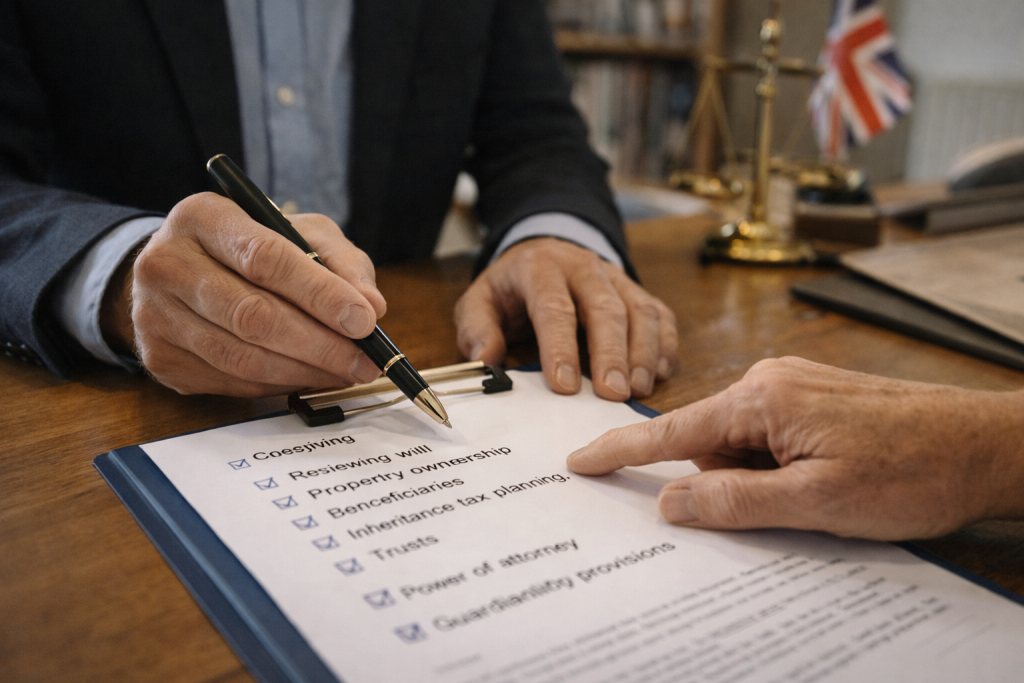
Proactive Planning
When choosing people for roles like Executors, Trustees, or Guardians, we strongly recommend speaking to them during your lifetime. Confirming they are willing to act ensures there are no surprises or complications later on.
Expert Guidance
If you have questions about your Will or Lasting Powers of Attorney (LPAs), our team is here to help.
Contact Us Today
Don’t leave your legacy to chance. Speak to one of our expert will writers for guidance tailored to your unique situation.
- Call us: 01483 910 865
- Visit us: www.opallegal.co.uk
- Email us: hello@opallegal.co.uk

